
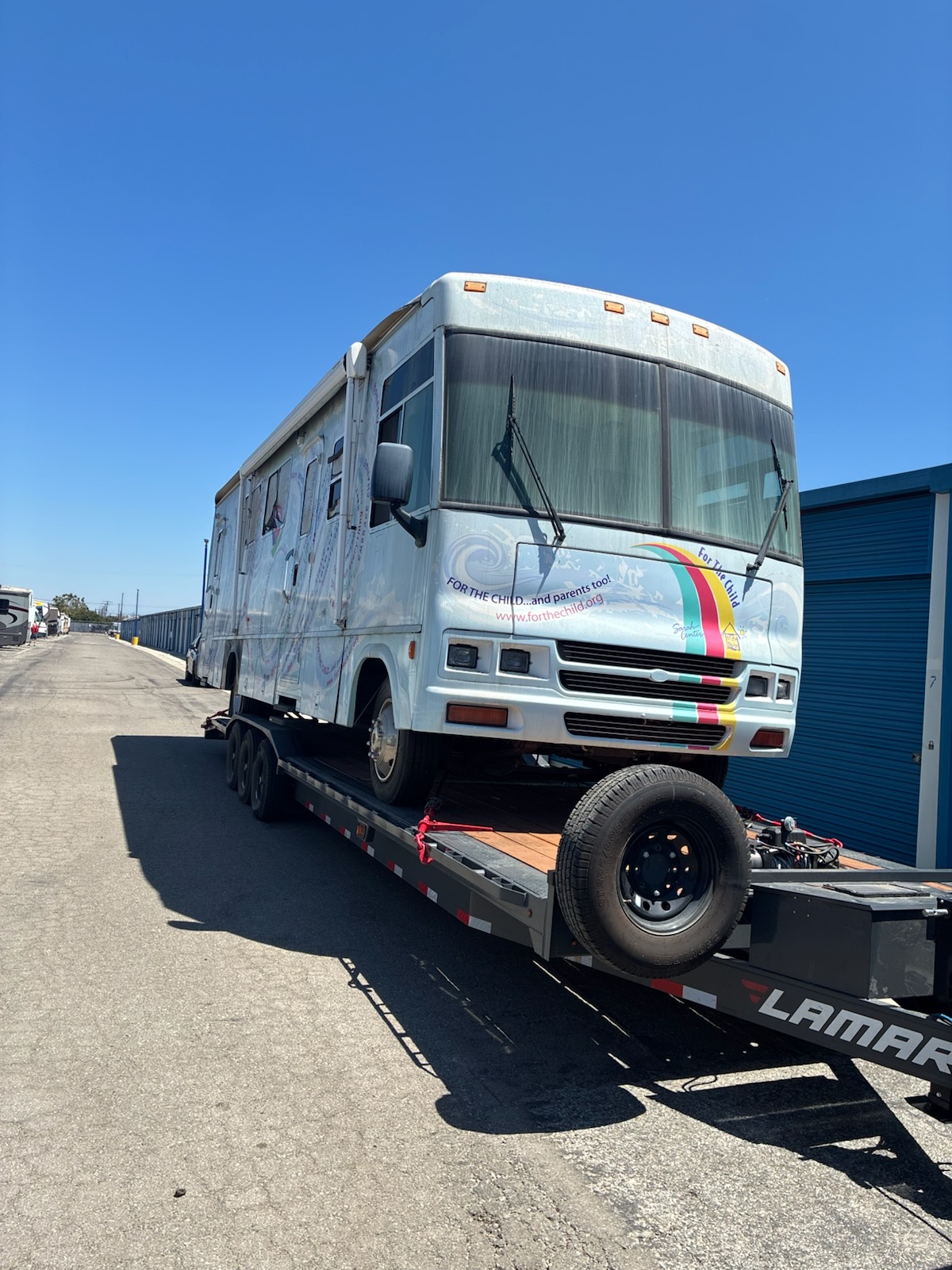
Hauling RVs, Travel Trailers & Campers to the Junkyard
Old RVs, travel trailers, campers, motorhomes, and recreational vehicles can be surprisingly difficult to get rid of. What once served as a comfortable way to travel, camp, or spend time outdoors can eventually become an unwanted structure sitting in a driveway, backyard, storage lot, campground, or commercial property.
When an RV reaches the end of its useful life, selling it may no longer be practical. Repairs can cost more than the vehicle is worth, water damage can make restoration unrealistic, and an older travel trailer may have little value on the private market. In other situations, the RV may not even be roadworthy enough to move without specialized equipment.
That is where professional RV hauling and junkyard disposal services can help.
RV Junkyards and specialized removal companies handle many types of recreational vehicles, including motorhomes, travel trailers, fifth wheels, pop-up campers, truck campers, toy haulers, and other unwanted RVs. Depending on the condition of the vehicle, it may be dismantled, salvaged for usable components, processed for scrap, or transported to an appropriate disposal or waste facility.
For owners searching for Junkyards that take RVs, the biggest challenge is often not deciding that the RV needs to go. The challenge is figuring out how to safely and legally get a large, heavy, damaged, or abandoned recreational vehicle from its current location to the facility that can handle it.
This guide explains what to expect when hauling an RV, travel trailer, or camper to a junkyard and how to make the process easier.
Why Old RVs Become Difficult to Dispose Of
RVs are considerably more complicated to dispose of than ordinary household junk.
A recreational vehicle can contain a frame, axles, tires, appliances, furniture, plumbing, electrical systems, propane equipment, batteries, tanks, windows, fiberglass, aluminum, steel, wood, and other materials. Larger motorhomes may also contain engines, transmissions, generators, fuel systems, and automotive components.
As an RV ages, many of those components can deteriorate.
Roof leaks can cause extensive water damage. Moisture can weaken flooring and walls. Tires can dry-rot while the vehicle sits unused. Wheel bearings may seize. Brakes can deteriorate. Batteries can fail. Engines can stop running. Appliances may become obsolete or impossible to repair.
Eventually, the owner may have a vehicle that occupies a tremendous amount of space but has very little practical value.
At that point, hauling the RV away may be the most sensible solution.
RV Junkyards Can Handle More Than Motorhomes
When people hear the term RV, they sometimes picture a large motorhome. However, recreational vehicles come in many different forms.
Professional RV Junkyards may accept or process:
- Class A motorhomes
- Class B camper vans
- Class C motorhomes
- Travel trailers
- Fifth-wheel trailers
- Pop-up campers
- Folding campers
- Truck campers
- Toy haulers
- Park models
- Older camping trailers
- Damaged recreational vehicles
- Fire-damaged RVs
- Water-damaged RVs
- Storm-damaged campers
- Non-running motorhomes
- Abandoned or unwanted trailers, when legally transferable
The removal method depends heavily on the type and condition of the RV.
A towable travel trailer that still rolls freely may be relatively straightforward to transport. A motorhome with a functioning drivetrain may be driven onto a transport truck. A severely damaged camper with locked wheels or structural problems may require specialized hauling equipment.
Junkyards That Take RVs
Finding Junkyards that take RVs is an important first step, but not every junkyard is equipped to handle a full-size recreational vehicle.
A conventional automotive junkyard may accept passenger cars and trucks but have no way to move a 30-foot travel trailer or a large motorhome. RVs require additional space, specialized towing equipment, and procedures for handling the different materials found inside them.
Before arranging transportation, verify that the receiving facility actually accepts the type of RV you have.
Ask questions such as:
- Do you accept complete RVs?
- Do you accept travel trailers?
- Do you accept campers without engines?
- Can you accept a non-running motorhome?
- Do you handle fifth wheels?
- Can you receive an RV with damaged tires?
- Do you accept water-damaged or fire-damaged units?
- Can you arrange transportation?
- Do you require the title?
- What paperwork is required?
- Are there restrictions on propane tanks, batteries, or fuel?
- Is the RV dismantled at your facility?
These questions can prevent a major problem where an owner pays for transportation only to discover that the destination cannot accept the vehicle.
How to Get Rid of Travel Trailers
One of the most common questions RV owners ask is how to get rid of travel trailers that are no longer usable.
The answer depends on the condition, ownership paperwork, location, and local disposal requirements.
If the trailer still has significant value, selling it may be an option. But when a travel trailer is severely damaged, extremely old, incomplete, or otherwise undesirable, selling it can take considerable time.
Donating may also be an option in certain circumstances, although organizations do not necessarily accept every type of trailer.
For severely deteriorated units, junkyard disposal and professional hauling may be more practical.
The first step is to determine whether the travel trailer can be moved normally.
If the tires are inflated, the wheels turn, the frame is intact, and the trailer can safely connect to an appropriate tow vehicle, transportation may be relatively straightforward.
If the trailer has flat tires, damaged suspension, a compromised frame, seized wheels, or significant structural deterioration, specialized hauling may be necessary.
This is why determining the condition of the trailer before scheduling removal is so important.
Why RV Hauling Requires Specialized Equipment
An RV may look like a large trailer, but transporting one is not always as simple as attaching a hitch and driving away.
Weight is one concern.
Length is another.
Height and width can also create transportation challenges.
An old camper may have low or flat tires, making its actual transport height different from what it was when new. A damaged RV may have portions of its exterior hanging loose. A motorhome that has been sitting for years may have brakes that no longer function properly.
Professional haulers evaluate these conditions before attempting removal.
Depending on the circumstances, equipment may include heavy-duty tow vehicles, flatbed trucks, winches, dollies, wheel-lift equipment, trailer equipment, or other specialized recovery tools.
The objective is to move the RV without causing unnecessary damage to the property, the RV, the transport equipment, or surrounding structures.
Preparing an RV for Removal
Owners can make the hauling process easier by preparing the RV before the scheduled pickup.
Start by removing personal belongings.
Check cabinets, closets, storage compartments, exterior compartments, refrigerators, drawers, beds, and underneath furniture. RVs often contain years of accumulated belongings.
Remove important documents, photographs, tools, valuables, camping equipment, and anything you intend to keep.
Next, disconnect utilities.
If the RV is connected to electricity, water, sewer, or other utilities, those connections should be properly disconnected before removal.
Propane systems require special attention. Do not assume that propane cylinders, tanks, or lines can simply be discarded with ordinary junk. Ask the hauling or receiving facility how propane equipment should be handled.
The same applies to batteries, fuel, oils, and other potentially hazardous materials.
What About RV Batteries and Propane Tanks?
RVs can contain materials that require special handling.
Common examples include:
- Lead-acid batteries
- Lithium batteries
- Propane cylinders
- Propane tanks
- Gasoline
- Diesel fuel
- Motor oil
- Hydraulic fluids
- Refrigerants
- Household chemicals
- Wastewater
- Freshwater
- Black-water holding tanks
The correct procedure depends on the type of material and local requirements.
Owners should tell the hauler about these items before pickup rather than waiting until the RV is being loaded.
If the RV contains fuel or other potentially hazardous substances, professional removal personnel can determine the appropriate procedure.
Never intentionally puncture, burn, cut, or otherwise tamper with tanks or pressurized equipment simply to make the RV easier to dispose of.
Emptying the RV Before Hauling
An old RV can contain several different holding tanks.
These may include fresh-water tanks, gray-water tanks, and black-water tanks.
Before transportation, the tanks should be handled according to applicable sanitation and disposal requirements.
Black-water tanks in particular should not be treated like ordinary garbage.
If the RV has been sitting unused for an extended period, the owner should disclose the condition of the tanks to the hauler.
A professional RV removal company can explain what needs to be done before the vehicle is transported.
Removing Personal Property From an Old Camper
One of the easiest mistakes to make is assuming that everything inside the RV automatically goes with the vehicle.
That is not necessarily the case.
Before the RV is hauled away, walk through it carefully.
Look for:
- Registration documents
- Titles
- Insurance documents
- Tools
- Keys
- Spare parts
- Family photographs
- Electronics
- Camping equipment
- Personal identification
- Jewelry
- Cash
- Important paperwork
- Prescription items
- Sentimental possessions
Open every compartment.
Old RVs frequently have hidden storage areas that are easy to overlook.
Once the RV has been transported to a junkyard or dismantling facility, recovering forgotten property may be difficult or impossible.
What Paperwork Is Needed to Junk an RV?
Paperwork requirements vary depending on the state, vehicle type, ownership status, and facility.
In many situations, proof of ownership is important.
For titled RVs, the title may be required before a junkyard or dismantler can accept the vehicle. Registration documents may also be relevant.
If the owner has lost the title, there may be procedures for obtaining a replacement title or documenting ownership.
Travel trailers can have different documentation requirements than motorhomes, so it is important to determine what applies to the specific unit.
Owners should not assume that because an RV is old or worthless, paperwork no longer matters.
The VIN, HIN where applicable, title information, registration information, and other identifying details can help establish exactly what is being transferred.
What If the RV Does Not Have a Title?
A missing title does not automatically mean the RV cannot be removed, but it can make the transaction more complicated.
The correct process depends on local law and the circumstances surrounding ownership.
If the RV belongs to you but the paperwork has been lost, you may need to contact the appropriate motor vehicle agency to determine whether a replacement title or other documentation is available.
If you inherited the RV, purchased it years ago without completing paperwork, or acquired it through another arrangement, additional documentation may be necessary.
A reputable RV removal company should be willing to discuss the documentation issue before pickup.
Abandoned RVs and Travel Trailers
Abandoned RVs create an entirely different situation.
Finding an old camper on your property does not necessarily mean you can simply sell it or send it to a junkyard.
Ownership needs to be established.
An abandoned motorhome or travel trailer may require a specific legal process before it can be removed, transferred, dismantled, or disposed of.
This is especially important for property owners, landlords, storage facilities, campgrounds, marinas, businesses, and contractors dealing with unwanted vehicles left behind by someone else.
Before disposing of an abandoned RV, determine what legal steps are required in the applicable jurisdiction.
Documentation of notices, ownership attempts, photographs, contracts, and other records can be important.
Searching for a Waste Facility for RV Disposal
Another common search is for a Waste facility for RV disposal.
However, ordinary household waste facilities are not necessarily equipped to receive entire RVs.
A recreational vehicle contains a combination of materials that may need to be separated or processed differently.
An RV may eventually be dismantled into components such as:
- Steel
- Aluminum
- Copper
- Wiring
- Appliances
- Glass
- Fiberglass
- Tires
- Wood
- Plastics
- Automotive parts
- Trailer components
The facility receiving the RV must have an appropriate process for handling these materials.
In some cases, a junkyard or dismantler may be the first destination, while individual components are subsequently sent to specialized processing facilities.
What Happens to an RV at a Junkyard?
The exact process varies, but an RV reaching the end of its useful life is generally evaluated before being dismantled or processed.
If certain components still have value, they may be removed.
For example, an RV could contain usable appliances, windows, doors, wheels, axles, generators, electrical components, plumbing fixtures, or other parts.
Other materials may be separated based on their composition.
The frame and other metal components can be particularly valuable as scrap.
Once reusable components and valuable materials have been removed, the remaining structure can be processed according to the facility’s procedures.
This is one reason professional disposal can be preferable to simply abandoning an RV.
Why Scrap Value Matters
Even an RV that has little resale value may contain valuable materials.
Large recreational vehicles can contain substantial amounts of metal.
Aluminum siding, steel framing, copper wiring, appliances, motors, axles, and other components can contribute to the overall scrap value of the vehicle.
The actual value depends on the RV’s size, condition, construction, components, current material prices, and transportation costs.
Some owners may be surprised to learn that an RV they considered completely worthless can still have recoverable material value.
However, transportation expenses and handling requirements must also be considered.
Removing a Motorhome That Does Not Run
A non-running motorhome presents additional challenges.
If the engine will not start, the transmission is damaged, the tires are flat, or the steering system does not function, the motorhome may not be safely towable in the traditional manner.
A professional hauler can assess the situation and determine the safest way to load or transport it.
Before scheduling removal, provide accurate information.
Tell the hauler:
- Whether the engine starts
- Whether the transmission works
- Whether the wheels roll
- Whether the tires hold air
- Whether the steering works
- Whether the brakes work
- Whether the RV is accessible
- Whether it is parked on pavement, grass, gravel, or soft ground
- Whether there are overhead obstacles
- Whether gates or narrow driveways are involved
Accurate information allows the hauler to bring appropriate equipment.
Removing a Travel Trailer With Flat Tires
Flat tires are common on neglected travel trailers.
Tires can lose air naturally, become damaged, or suffer dry rot after years of sitting.
A trailer with flat tires may still be removable, but loading can require additional equipment.
The condition of the wheels and axles is also important.
A trailer that has been sitting for years may have seized brakes or damaged bearings. Simply attaching it to a truck and pulling it down the road could be unsafe.
Professional hauling is especially valuable when the trailer has been stationary for a long time.
When an RV Is Too Damaged to Tow
Some RVs should not be towed normally.
Examples include units with severe frame damage, major fire damage, collapsed roofs, missing axles, destroyed suspension, or structural deterioration.
A damaged RV may need to be loaded rather than towed.
This is one of the primary differences between ordinary RV transportation and junk RV removal.
The goal is not to preserve the RV for a long-distance camping trip. The goal is to safely recover the unwanted unit and transport it to the appropriate destination.
Finding “Get Rid of RV Near Me” Services
When an RV has become a problem, many owners search online for “Get Rid of RV near me.”
That search usually means the owner is looking for a local company capable of handling the entire removal process.
Local hauling services can be particularly useful because transportation costs increase with distance.
A nearby provider may be able to inspect the RV, determine the equipment needed, provide a removal quote, and arrange transportation.
When comparing companies, look beyond the advertised price.
Ask whether the quote includes:
- Labor
- Loading
- Transportation
- Towing
- Disposal
- Dismantling
- Additional equipment
- Difficult-access fees
- Disposal charges
A low initial price is not necessarily the lowest final cost if significant additional fees appear later.
How Much Does It Cost to Haul an RV to a Junkyard?
There is no universal price for RV hauling.
Several factors influence the cost.
The size and weight of the RV are obvious considerations. A small pop-up camper is much easier to transport than a 40-foot fifth wheel.
Distance matters as well.
The condition of the RV is another major factor.
A functioning trailer with good tires may be much easier to move than a severely damaged motorhome sitting on flat tires.
Access can also affect the price.
An RV parked behind a narrow gate, beneath low tree branches, beside a building, or on soft ground may require additional work.
Finally, the destination’s acceptance requirements can influence the overall cost.
For an accurate quote, provide photographs and as much information about the RV as possible.
Why Photographs Help With RV Removal
Photos allow a hauling company to understand the situation before arriving.
Useful photographs include:
- A full side view of the RV.
- The front.
- The rear.
- All four corners.
- The tires and wheels.
- The hitch or towing connection.
- The parking area.
- The driveway or access route.
- Any visible damage.
- Any obstacles surrounding the RV.
If the RV is behind a fence or inside a storage facility, include photos showing the access conditions.
The more accurately the hauler understands the job, the easier it is to plan the removal.
Getting an RV Out of a Backyard
Backyard RV removal can be significantly more complicated than driveway removal.
Large recreational vehicles need room to maneuver.
Fences, trees, sheds, utility poles, retaining walls, swimming pools, parked vehicles, and buildings can all create obstacles.
Before scheduling the job, take measurements where possible.
Consider the width of gates and driveways.
Also consider overhead clearance.
A vehicle that can technically fit through a gate may still be impossible to remove if there is not enough room to turn.
Experienced RV haulers can evaluate difficult access situations and determine whether specialized recovery equipment is needed.
RV Removal From Storage Facilities
Storage facilities often have strict rules for vehicle removal.
If your RV is located at a storage property, check with management before scheduling the pickup.
Determine:
- Required pickup hours
- Gate access
- Identification requirements
- Insurance requirements
- Whether management needs advance notice
- Whether the RV can be moved through the facility
- Whether a large tow truck can access the storage space
Providing the hauler with the exact storage location and unit number can save time.
RV Removal From Campgrounds
Campgrounds and RV parks also have their own rules.
An abandoned or unwanted camper may have been sitting on a site for months or years, and removal can become an administrative problem for both the owner and campground operator.
If you own the RV, coordinate with management so the hauler can access the property.
If the RV has been abandoned by a former tenant or customer, do not assume that the campground automatically owns it.
Follow the applicable abandoned-property and vehicle procedures before transferring it to a junkyard.
The Environmental Side of RV Disposal
Responsible RV disposal is about more than simply getting the vehicle out of sight.
RVs contain numerous materials that should not simply be dumped.
Fluids, batteries, refrigerants, propane equipment, tires, and other components require appropriate handling.
Dismantling an RV allows materials to be separated and processed more effectively.
Metal components can be recovered as scrap. Usable components may be salvaged. Other materials can be directed toward appropriate disposal channels.
The result is a more controlled process than leaving an unwanted RV on private property or attempting to dismantle everything yourself.
DIY RV Disposal vs. Professional Hauling
Some owners consider dismantling an RV themselves.
While that may seem inexpensive, it can quickly become a major project.
A large travel trailer can contain hundreds of individual components.
Removing cabinets, appliances, flooring, wiring, siding, insulation, plumbing, tanks, windows, and structural materials can take substantial time.
There are also safety considerations.
Old RVs may contain deteriorated wiring, sharp metal, damaged fiberglass, mold, chemicals, pressurized systems, and other hazards.
Then there is the problem of what to do with all the material once the RV has been dismantled.
Professional hauling eliminates much of that work.
Instead of spending days or weeks taking apart an unwanted camper, the owner can arrange removal and have the entire unit transported to an appropriate facility.
Choosing the Right RV Removal Company
Not all junk removal companies handle large recreational vehicles.
When choosing a service, look for experience with the specific type of RV you own.
Ask whether they regularly handle:
- Motorhomes
- Travel trailers
- Fifth wheels
- Campers
- Pop-up trailers
- Non-running RVs
- Damaged RVs
- Abandoned RV situations
You should also determine whether they provide transportation or simply remove the RV after someone else has arranged hauling.
The ideal service understands both the removal and disposal sides of the job.
A Simple RV Junkyard Removal Process
For many owners, the process can be broken into a few basic steps.
Step 1: Identify the RV
Record the make, model, year, approximate length, and type of RV.
Step 2: Gather Documentation
Locate the title, registration, VIN information, and other ownership documents.
Step 3: Photograph the RV
Take clear pictures of the RV and its surroundings.
Step 4: Describe Its Condition
Explain whether it runs, rolls, steers, has inflated tires, or has significant damage.
Step 5: Identify Access Problems
Tell the hauler about gates, narrow driveways, low branches, fences, storage facilities, or other obstacles.
Step 6: Remove Personal Property
Take everything you want to keep out of the RV.
Step 7: Address Fluids and Hazardous Materials
Tell the hauler about propane, fuel, batteries, tanks, and other potentially hazardous materials.
Step 8: Arrange Transportation
Confirm the pickup date, equipment, price, and destination.
Step 9: Complete the Ownership Transfer
Sign the required paperwork and retain copies for your records.
Step 10: Let the RV Be Hauled Away
Once the paperwork and removal arrangements are complete, the RV can be transported for dismantling, salvage, scrap processing, or appropriate disposal.
Don’t Let an Unwanted RV Become a Permanent Fixture
A dead motorhome or deteriorated travel trailer can quickly become an eyesore.
It takes up valuable driveway space.
It can create problems with homeowners associations, landlords, neighbors, storage facilities, or property managers.
It may also continue deteriorating while sitting outside.
Water enters through damaged roofs. Tires deteriorate. Metal components rust. Interior materials become damaged.
The longer an RV sits unused, the harder it can become to move.
Removing it sooner can prevent the situation from becoming even more complicated.
Get Your Old RV Out of the Way
Whether you have an old motorhome that no longer runs, a travel trailer with severe water damage, a camper with rotted floors, or a fifth wheel that has simply reached the end of its useful life, professional RV hauling can provide a straightforward solution.
Instead of searching endlessly for buyers who may not want a damaged recreational vehicle, owners can explore RV Junkyards and specialized disposal services capable of handling oversized recreational vehicles.
For anyone researching Junkyards that take RVs, the key is finding a facility or hauling company that understands the unique requirements of RV transportation.
If you’re researching How to get rid of travel trailers, start by determining the trailer’s condition, confirming your ownership paperwork, documenting the vehicle with photographs, and finding out what type of transportation is required.
If you need a Waste facility for RV disposal, make sure the facility is equipped and authorized to handle the type of recreational vehicle and materials involved.
And if you’re searching for “Get Rid of RV near me,” look for a professional service that can evaluate the RV, handle the hauling, and help coordinate the final disposal process.
An unwanted RV does not have to sit in your driveway forever.
With the right hauling equipment, proper documentation, and an appropriate disposal destination, even a severely damaged or non-running RV can be removed and taken off your property.
Final Thoughts on RV, Camper & Travel Trailer Hauling
Getting rid of an old RV is often more complicated than getting rid of an ordinary vehicle. The size, weight, construction, condition, and combination of materials found inside recreational vehicles require a different approach.
The good news is that owners do not necessarily have to handle the entire process themselves.
Professional RV removal and junkyard services can coordinate the transportation of motorhomes, campers, travel trailers, fifth wheels, and other recreational vehicles. Depending on the condition of the unit, the RV may be salvaged, dismantled, processed for scrap, or sent through an appropriate disposal process.
Before arranging pickup, make sure you understand the paperwork requirements, disclose the RV’s condition, identify any access challenges, remove personal belongings, and communicate the presence of propane, fuel, batteries, tanks, or other materials requiring special handling.
Most importantly, do not wait until an old RV becomes completely immovable.
The earlier you arrange professional removal, the more options you may have for safely hauling it away.
Whether you’re dealing with an abandoned-looking camper on a property, a water-damaged travel trailer, a non-running motorhome, or an aging RV that simply isn’t worth repairing anymore, the right removal service can turn a major property problem into a completed job.
From the initial quote to the final haul, professional RV disposal is about making the process easier, safer, and more manageable.
When the time has come to stop paying for storage, stop looking at an unwanted camper in the driveway, or reclaim valuable property space, hauling the RV to an appropriate junkyard or disposal facility may be the solution you’ve been looking for.